
Newsroom overview

Who They Are
A nonprofit, non-partisan, and digital-only newsroom dedicated to in-depth news and reporting on public policy, government, and politics in Connecticut
Location
Hartford, Connecticut
Founded
2010
Membership program launched
2019
Monthly unique visitors
~ 250,000
Number of members
1,950
Percentage of revenue coming from membership
10 percent

Each year, as the Connecticut legislative session comes to a close, The Connecticut Mirror (which also goes by CT Mirror) kicks off one of its biggest and most successful annual fundraisers: The Gavel Give.

The Gavel Give is an aggressive 36-hour-long fundraising event that coincides with the end of the state’s legislative session. Although the timing of The Gavel Give changes slightly each year, the concept stays the same. The CT Mirror, with a 20-person staff dedicated to reporting on public policy, government and politics, uses the opportunity to remind readers about the value of their work and asks them over and over again to support future legislative reporting. The first time they ran Gavel Give in 2021, they raised about $32,000. In 2022, they raised about $39,000. 

Why this is important

The final days of Connecticut’s legislative session mark a time when CT Mirror publishes dozens more stories and sees almost twice as many visitors than usual. Kyle Constable, CT Mirror’s director of membership and digital innovation, said they decided to “channel the natural energy” that comes from the annual event and turn it into a fundraising opportunity.

Most newsrooms have similarly predictable moments of elevated audience attention. Gavel Give offers a replicable way that other small and medium-sized newsrooms can leverage intense spikes in audience interest — not just once, but repeatedly, as CT Mirror has. 

This case is particularly useful for newsrooms without dedicated membership staff. It can be hard to sustain a weeks-long membership campaign on a tiny team while still maintaining editorial operations, but reorienting staff around a 36-hour membership sprint might be more feasible.

What they did

Because Gavel Give happens almost exclusively over email, preparation begins months ahead of time with an effort to grow their email list. Each year, as part of a sprint with News Revenue Hub, Constable tests and updates CT Mirror’s newsletter sign-up calls to action on their website, including tweaking the language, location, and design of CTAs. “We want something that looks and feels different each year,” Constable explained. These small changes have a big impact: Their newsletter subscribers continue to grow, despite the fact that they regularly clean out inactive users.

CT Mirror has three core newsletters — their daily morning briefing, daily afternoon briefing, and weekly Sunday roundup — with around 15,000; 13,000; and 16,000 subscribers, respectively. They send all campaign emails to anyone who is signed up for any of their newsletters.

A match from a major donor is another key component of the campaign. A few months ahead of the inaugural Gavel Give, CT Mirror’s publisher reached out to one of the organization’s biggest donors for support. “We asked for a triple match,” Constable said, “because we really wanted to make this a notable event.” The donor agreed, and returned in 2022 to offer the same triple-match contribution.

Constable does as much work on the campaign ahead of time as possible, including designing, writing and scheduling countdown emails, and creating graphics that can be easily replicated and updated.

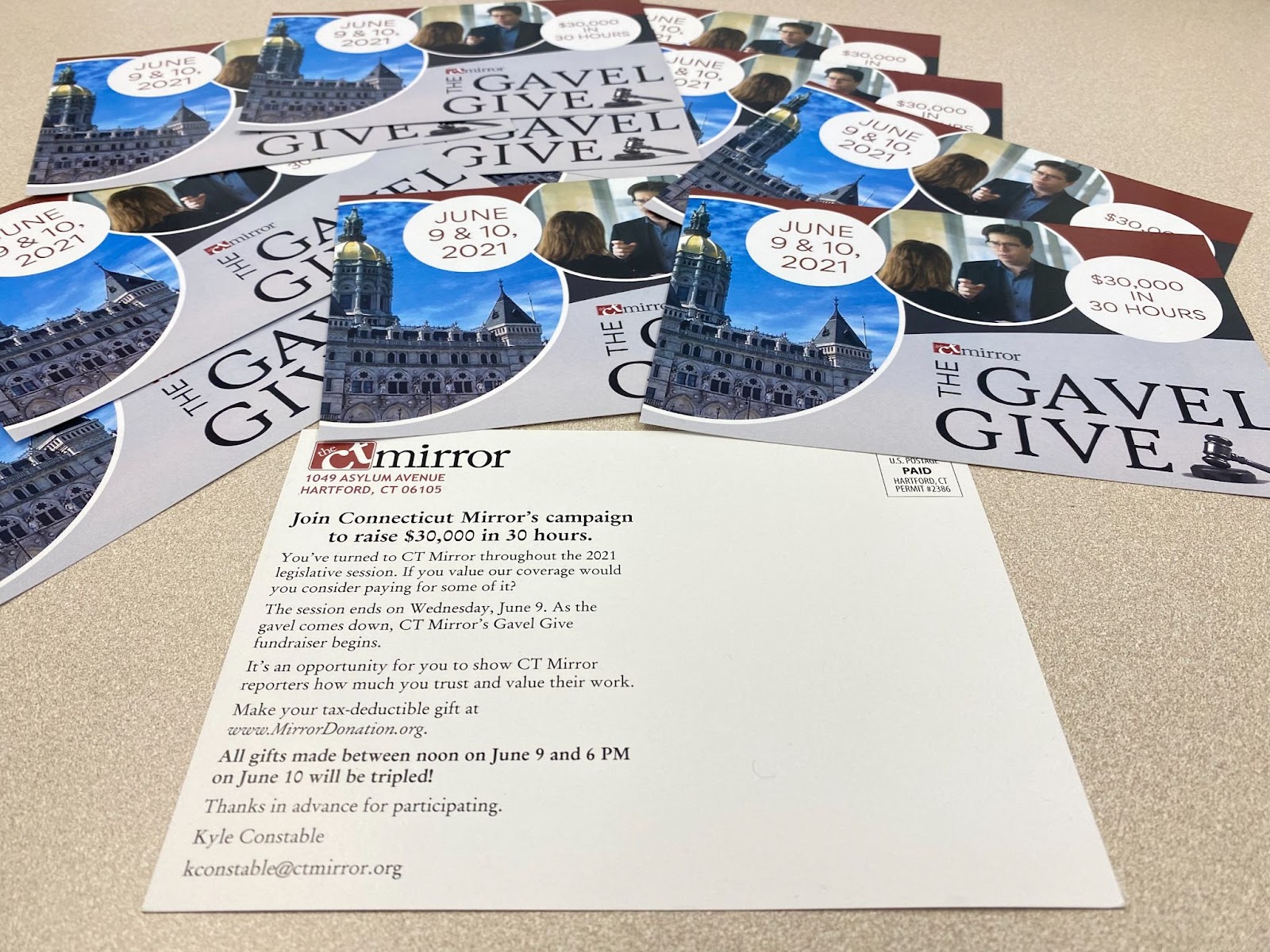
Their first campaign outreach for 2022 went out a few days before the fundraiser: a countdown postcard to their readers announcing their goal: to raise $36,000 in 36 hours. Forty-eight hours before kickoff, they sent a reminder email. They sent another reminder 24 hours ahead of the campaign.
The first official campaign email went at noon on Day 1 of Gavel Give. Over two days, CT Mirror sent eight fundraising emails, including appeals from reporters and editors, and updates on campaign progress. They also let readers know that all Gavel Give donations would be triple matched by an anonymous donor, something that added to the urgency of the event. Each of those emails (including the 100% email, which netted roughly another $1,000) brought in additional donations from readers.

Here’s a breakdown of the emails:

  • Email 1:
    • Sent: Monday, May 2 at 12 p.m.
    • Subject line: The Gavel Give starts in 48 hours!
    • Content: A static image reminder that the campaign starts in two days
  • Email 2:
    • Sent: Tuesday, May 3 at 12 p.m.
    • Subject line: 24 hours until The Gavel Give begins!
    • Content: A static image reminder that the campaign starts in one day
  • Email 3:
    • Sent: Wednesday, May 4 at 12 p.m.
    • Subject line: The Gavel Give STARTS NOW!
    • Content: A static image reminder about the campaign and triple-match
  • Email 4:
    • Sent: Wednesday, May 4 at 2 p.m. (and re-sent to non-openers the next day at 9:30 a.m.)
    • Subject line: Connecticut’s budget realities
    • Content: CT Mirror’s role in providing context around the state’s fiscal crisis 
    • Signed by: Keith Phaneuf, state budget reporter
  • Email 5:
    • Sent: Wednesday, May 4 at 7 p.m (and re-sent to non-openers the next day at 10:30 a.m.)
    • Subject line: How many reporters still cover the state Capitol?
    • Content: Unlike other states, Connecticut’s number of statehouse reporters has stayed the same — namely because CT Mirror has grown
    • Signed by: Elizabeth Hamilton, executive editor
  • Email 6:
    • Sent: Wednesday, May 4 at 8 a.m.
    • Subject line: The first milestone: 50%!
    • Content: A static image showing halfway progress to the campaign goal
  • Email 7:
    • Sent: Thursday, May 5 at 11:45 a.m. (re-sent to non-openers at 2:30 p.m.)
    • Subject line: In Connecticut, 2022 is just getting started
    • Content: The legislative session just ended, which means it’s time to shift gears to election season
    • Signed by: Mark Pazniokas, Capitol bureau chief
  • Email 8:
    • Sent: Thursday, May 5 at 1:30 p.m. (re-sent to non-openers at 5:45 p.m.)
    • Subject line: Getting closer …
    • Content: A static image showing 75% progress to the goal, and an ask to give
  • Email 9:
    • Sent: Thursday, May 5 at 7:15 p.m. (re-sent to non-openers at 9:30 p.m.)
    • Subject line: 90%
    • Content: A static image announcing “SO CLOSE,” and an ask to give
  • Email 10:
    • Sent: Thursday, May 5 at 11:00 p.m.
    • Subject line: 100 PERCENT!
    • Content: A static image thanking readers and inviting them to still donate

Throughout the campaign, Constable posted progress updates on Twitter and Facebook.
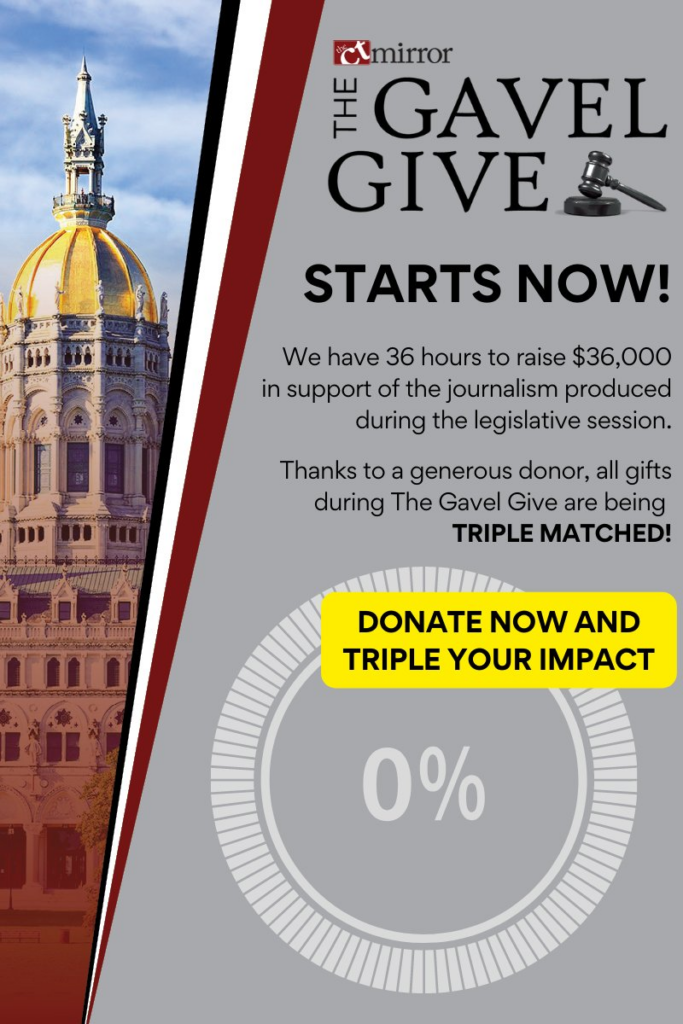
A dynamic progress bar also sat at the top of CT Mirror’s homepage throughout the fundraiser, yet another touchpoint for readers to learn about the challenge.
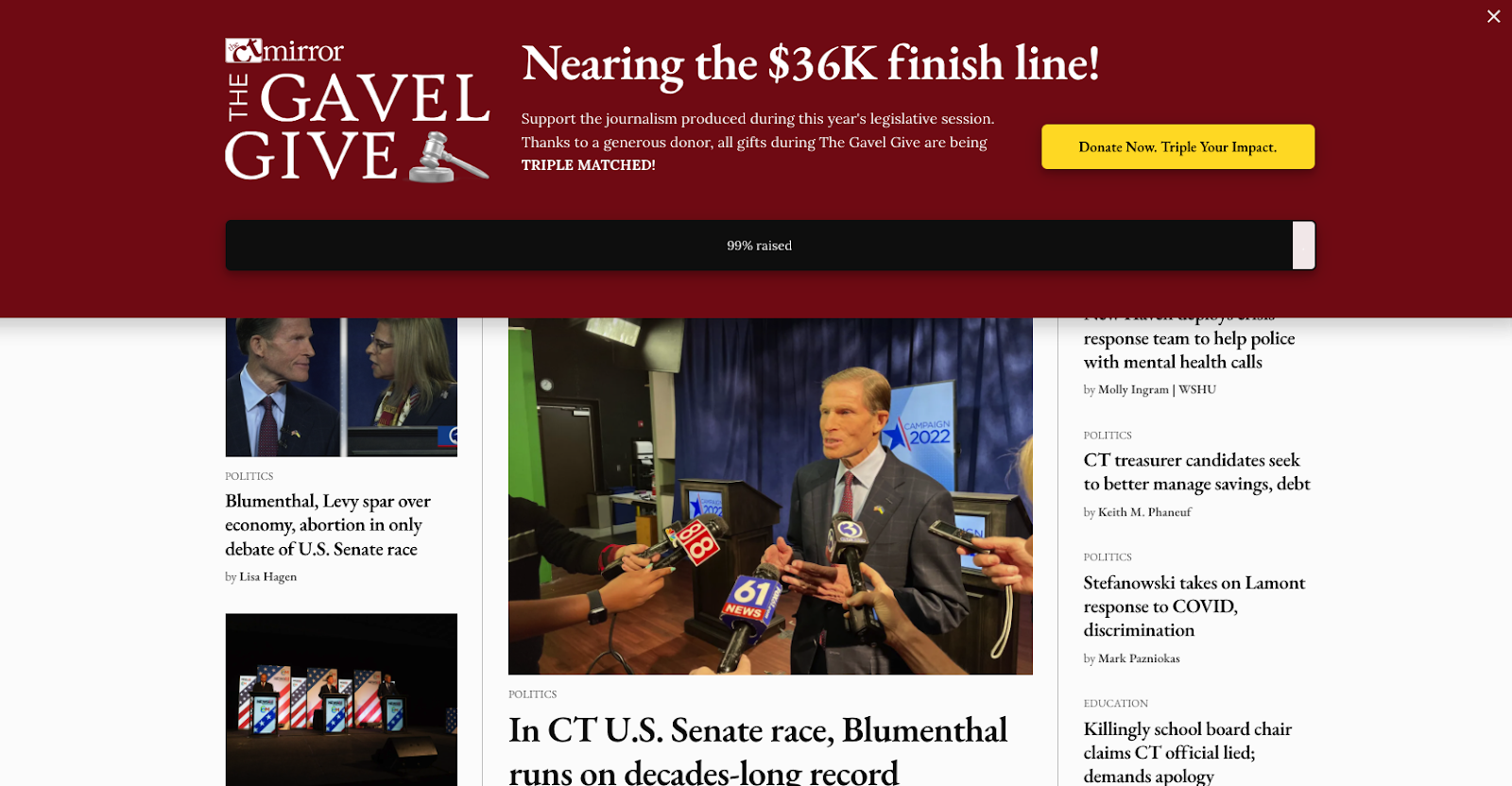
The dynamic progress bar (Courtesy of CT Mirror)

CT Mirror first introduced The Gavel Give in 2021. Their goal was to raise $30,000; they raised $32,339. In 2022, they increased their goal to $36,000. They raised $39,186.

The results

In 2021, 306 readers contributed to the campaign, including 67 people who were new CT Mirror donors. In 2022, 283 donors contributed to Gavel Give, including 72 new donors — a little over 25% of all donors. The majority of Gavel Give gifts are one-time donations.

Almost 100 people unsubscribed from CT Mirror’s mailing list during the 2022 campaign. “Do we hate to see them go? Of course,” Constable shared. “But if a hundred people off the email list means $40,000 in new revenue, I’m going to take that trade-off every day of the week.” 

Constable also created a way for newsletter subscribers to skip Gavel Give emails. Starting with the 48-hour preview, all campaign messages include a clear opt-out message and link in the footer. The message read: “Already donated or want to opt out of Gavel Give emails? Update your preferences to skip these emails specifically.” Around 100 readers took advantage of that option.

This isn’t the only time that CT Mirror fundraises. Constable said that The CT Mirror has a “mindset of constant campaigning.” They send out regular donation-request emails that feature standout stories and other newsroom updates, participate in NewsMatch, and look for other fundraising campaign opportunities throughout the year. 

“So much of the fundraising mentality is about the long-run,” Constable explained. “We’ll take the $10 monthly donor over the one-time $100 gift, because after 12 months, it’s gonna be $120 instead of $100 and so on.” 

With The Gavel Give, though, they can activate a different set of potential donors, ones who might not ever become a recurring supporter. “Different people respond to different things,” Constable added. “The Gavel Give helps us tap into those readers who get caught up in the energy of the moment and make that financial gift.”

In the end, it’s all about balance. The combination of steady membership program growth, the end-of-year NewsMatch campaign, and The Gavel Give creates “a solid blueprint for the year,” he explained.

What they learned

Build your mailing list. Constable credits much of the success of The Gavel Give to “the constant work that we are doing to grow our email newsletter list.” That work includes regularly refreshing calls-to-action, or CTAs, on CT Mirror’s website and launching new newsletters. “If we were not always adding new people to our email list, then we would have no new donors,” Constable explained.

Create a sense of urgency. By announcing a goal to reach within a certain timeframe and offering a triple match for donations made during that period, there’s palpable excitement. And through progress-bar graphics, emails from reporters and editors, and social posts, the newsroom constantly reminds readers of the goal, the deadline, and how close they are to both of those things. “The more you can create the feeling that this is an event,” Constable explained, “the more successful it’s going to be.”

Identify room for improvement. Constable and the CT Mirror team always take time after a campaign like The Gavel Give to reflect on how the fundraiser went and what they could improve next time. During the retrospective meeting, the staff discusses what worked and what didn’t; how the fundraiser felt workload-wise; whether they hit their revenue goal; and what they could do differently next year. One takeaway from 2021 was how successful the Gavel Give countdown-timer-turned-progress-bar performed on their homepage. In 2022, after CT Mirror relaunched its site, Constable’s first priority was to rebuild that bar for the next campaign.

Key takeaways and cautionary notes

Be prepared. Creating all of the campaign assets ahead of time makes a huge difference. In the weeks leading up to The Gavel Give, Constable crafts emails, designs campaign graphics, and streamlines as many processes as possible. “At the end of the day, The Gavel Give campaign is a ridiculous amount of emails in a very short amount of time, and to create each and every one of those emails takes time,” Constable said. “But if you can find ways to increase efficiency, then you’ve got a winner.”

Be aggressive. Sending eight fundraising emails in two days is a lot, but it’s part of running a successful deadline-driven campaign. Overall, Constable’s been surprised how receptive most readers are to the volume of messages during The Gavel Give. “It’s not that you can’t send too many emails; you can but you can send a lot more emails than you think you could before you’ve sent too many emails,” he said.

Be yourself. Constable said that most newsrooms can find campaign opportunities. “You know what your big moments are in the year,” he offered. “You don’t have to overthink it. Just go where your readers are and build something around the natural momentum.”

Other resources 

Newsroom overview

Who They Are
A digital media and consumer analytics company that inspires black women to realize how they can change their world through every click they make and every conversation they have
Location
London, U.K.
Founded
2014
Membership program launched
2017
Number of members
About 1,000
Percentage of revenue from membership
60 percent

Black Ballad aims to be the leading digital and physical space for creating economic empowerment for Black British women. In pursuit of that, they publish stories about Black women’s experiences, host events, support a vibrant member-only Slack community, and survey their audience members formally and informally. Their relationship with their readers and members is strong.

All of this has helped Black Ballad position itself as an organization that reaches, serves, and knows the 25 to 45-year-old British Black professional woman better than almost anyone else. They had a hunch that knowing this community would not just help them grow their membership program – it would help them unlock other revenue opportunities, too. 

In 2020, they tested that hypothesis by packaging their insights and journalism into an editorial campaign about Black motherhood. They used informal feedback from their Slack group to design a survey on the topic, distributed that survey to more than 2,000 women, and used the results to guide editorial coverage, add new knowledge to the conversation around Black motherhood, and secure a paid partnership to bring the conversation to mainstream media.

Why this is important

When people talk about membership revenue, they stop their calculations at the revenue from membership fees. But if you have a strong feedback loop with your members, that relationship can be the genesis of other mission-aligned revenue opportunities.

“Learning about what audiences care about and what they find important are more important data points than just surface-level statistics that capture general population behaviour,” co-founder and publisher Bola Awoniyi says. “If you’ve done a good job defining who your publication is for… then you can craft a business that’s based less on your scale and more on your understanding.”

But gaining the level of member engagement you need for that work requires mutual trust. A core part of Black Ballad’s mission is to create a space online where Black women can feel safe and thrive. By continually fulfilling that mission, they are making deposits on the trust that they draw on every time they ask their members to take time and energy to share personal insights. 

While few organizations have an audience as specifically defined as Black Ballad, these same principles can be applied to specific audience segments for organizations with larger audiences.

What they did

Black Ballad knew motherhood was an important topic for their members because it was consistently one of the top three topics members expressed interest in in the member onboarding survey. But the catalyst for the editorial campaign was new, critical statistics on Black women’s material experiences and Serena Williams’ and Beyoncé’s decisions to share their stories, both of which launched the topic into the mainstream. 

Black Ballad already had a strong sense of how their members felt about the topic. In May 2018 they created a #motherhood channel in their members-only Slack group. A year and a half later, they used those informal insights to begin designing an editorial campaign around Black motherhood, which they launched in January 2020 with a letter from editor-in-chief Tobi Oredein. (Disclosure: Membership Puzzle Project supported this editorial campaign with a grant from its Membership in News Fund.)

They began that project with a 100+ question survey, which asked questions such as:

  • For biological mothers, how prepared did you feel for your most recent child’s arrival?
  • For biological mothers, in what ways did you look into your own and your partner’s fertility prior to pregnancy? 
  • How long were you trying to conceive your first child?
  • For biological mothers, during your current pregnancy, how would you rate the care you received from the following NHS [National Health Service] healthcare professionals?
  • For foster parents, how long did the process take in being assessed for adoption/fostering from the start of the process, to child placement?
  • How different has the reality of motherhood been from your expectation?
  • Overall, how would you rate the support postpartum you have received?
  • For stepmothers, how involved would you say you are in decisions related to your stepchildren’s upbringing?
  • In what ways do you anticipate becoming a mother impacting your career, or in what ways did becoming a mother impact your career?
  • To what extent does/did money feature as a factor when thinking about having a family and how big your family should be?

They used facts about the Black motherhood experience as hooks to help the survey spread on social media, beyond their existing audience. 

That survey had a 60 percent completion rate and 2,600 respondents, with 40 percent of responses coming from outside London, where Black Ballad is just beginning to grow its membership. 

For the next several months they published on the topic continuously, using the survey data to add immediacy and depth to stories on topics like infertility. They continued to drive conversation and gather additional insights for months after by resurfacing data points and quotes via atomic social media posts

The results

Amid the Black Lives Matter protests of summer 2020, Black Ballad secured a partnership with HuffPost UK to talk about Black motherhood. For a week in August they took over HuffPost’s lifestyle section, parts of their homepage, their politics podcast, and several other owned assets. HuffPost is also paying the Black Ballad freelancers commissioned to do stories for HuffPost. They also secured a deal with the podcast company Acast based on the motherhood survey results and editorial work that will be coming out in fall 2020.

Black Ballad also fielded inquiries from a university that wanted to license access to the Black motherhood survey data for use in their sociology program and talked to several brands about partnerships. Although the pandemic disrupted both, Black Ballad sees them as indications of future opportunities, which were picking back up at the time of publication. 

Awoniyi now thinks of the Black motherhood project as a case study they can use to pitch future projects. He sees opportunities to monetize via sponsorships and grant underwriting, paid media partnerships, membership drives, and partnerships with academia and other institutions who find this type of data useful. They will use the steady stream of feedback from their onboarding survey and the Slack group to identify future high-interest topics worthy of this level of coverage. 

Each “package” is likely to have the following elements:

  • A detailed kick-off survey to gather quantitative and qualitative insights from Black women
  • Editorial commissions based on the survey results (sometimes a specific result was the genesis of a story, but more often the responses pointed to something interesting in the data for Black Ballad to explore more broadly, Awoniyi says)
  • Events 
  • Media partnerships and takeovers 
  • The packaging of data for other organizations who can use it in their work

Informed by their experience with the Black motherhood project, in May 2020 Black Ballad launched the Great Black British Women’s survey, a 100-question survey aiming to find out what issues most influence Black women’s lives. “We don’t want to repeat the mistakes of mainstream media and have one overly dominant voice, but claim to represent an entire demographic of people,” they wrote. 

Awoniyi anticipates that revenue opportunities connected to audience insights will “make up the lion’s share of Black Ballad’s revenue” in a couple years. “It’s much easier to rely on a £35,000-a-year deal from a university to license the data than however many thousand users it would take to replicate that in membership fees,” he says.

That doesn’t mean the members are any less central to their mission. Although other revenue streams remove some of the financial pressure to relentlessly grow the membership program, Black Ballad still sees member growth as a key indicator that they’re continuing to create editorial content and experiences worth paying for, and they know they need to continue serving their existing members well for this model to work.

Awoniyi foresees Black Ballad collecting a wide range of data points via surveys, from how much Black women spend on a certain item a month to how Black women in different parts of Britain feel about hiring nannies. Their goal is to build a database that individuals and companies can subscribe to in order to access survey response data stripped of any personal information – particularly appealing amid the move to first-party data.

What they learned

You need to know more about your members than their newsletter open rates.  Black Ballad has a multi-layered picture of who a Black Ballad member is – and that makes it much easier to design high-interest, high-impact editorial campaigns. She is:

  • A Black woman, typically 25 to 45 years old
  • A “socializing young renter” or mother with a young family 
  • Likely part of an educated family (85 percent of their paying audience has a university degree, 45 percent have a master’s degree, and 10 percent have above a master’s degree) 
  • Online a lot, especially on her smartphone
  • Highly social, likely active on Black Twitter
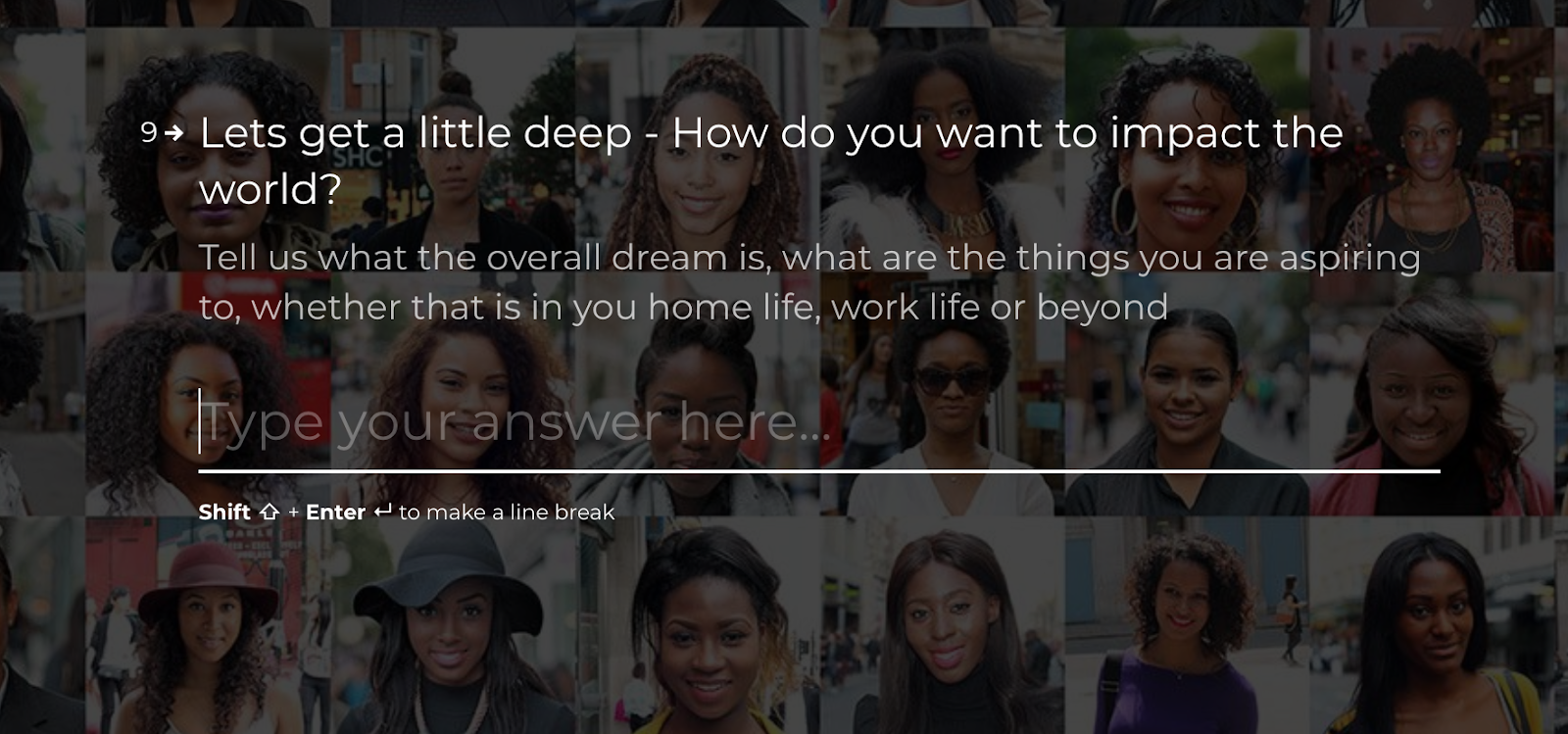
One of the questions asked in Black Ballad’s onboarding survey (Courtesy of Black Ballad)

“We call her professionally ambitious, culturally curious and socially conscious. … She wants to experience the fullness of life and figure out the best way to avoid the pitfalls that systemic racism and systemic sexism have laid before her. Black Ballad’s job is to help her figure out how to live her best life and how to maximize her life with every click she makes and conversation she has,” Awoniyi says. “She is in pursuit of how she can become her best self.”

Conversations are data too. The Slack group began as a safe place for Black women to gather online and build community, and that remains its primary goal. But, Awoniyi says, it has also evolved into “a pipeline of data for Black women who want to talk about issues most important to them.” Although anecdotal, when systematically collected, that data can be used to shape surveys, events, and editorial campaigns with stronger traction.

Monetizing these insights requires deep trust. Awoniyi knows that these editorial campaigns are only possible because they have their members’ trust. In their Black motherhood survey, they asked deeply personal questions about tough topics such as fertility and miscarriages. If Black Ballad takes steps toward becoming a true consumer insights platform, they’ll have to be explicit with their users about how Black Ballad uses their data.

Key takeaways and cautionary tales

It’s all about knowing your community. “The superpower of digital businesses is that they have the power to really understand their audience. More than anyone else, media businesses do very well when they focus on the community they serve and the topics that trickle down from it,” Awoniyi says. “I would definitely encourage other media brands to go back to first principles of ‘What does this audience need to fulfill whatever objectives they have and what do the people who want to reach this audience need to fill the objectives they have? If you’re able to do that, a bunch of revenue opportunities that are specific to the people you’re experts in should come your way.”

And having their trust. The other thing Awoniyi mentions as critical to the success of this approach is trust. Black Ballad is asking women to share their lived experiences with them (albeit in an aggregated, anonymized way) so that they can package that information and monetize it. “Because we built our brand on putting Black women first, trust is implicit. Black Ballad isn’t going to violate any trust that the audience has in them. We want to take a more robust approach in how we sign off usage of that data as we figure out how to use it commercially. But it’s not just that people pay for membership and trust us. In order to make it successful, trust is not just necessary, it’s table stakes.”

Make your onboarding survey work for you. Many of Black Ballad’s ideas originate with their onboarding survey, which includes the question “What three topics are you most interested in?” That survey has a 55 percent completion rate, with a mini incentive to encourage participation: you have to fill it out in order to get your coveted Black Ballad member pin. They use the onboarding survey data to inform everything from what channels to offer in their member-only Slack to what they should focus on in future editorial campaigns. And because its distribution is automated, it’s a form of always-on audience research.

Other resources

Newsroom overview

Who They Are
The Compass Experiment is a local news laboratory founded by McClatchy and Google. They publish Mahoning Matters and the Longmont Leader
Location
Youngstown, Ohio
Founded
2019
Monthly unique visitors
190,000

The Compass Experiment, a local news laboratory founded by McClatchy and the Google News Initiative, launched Mahoning Matters in 2019 in Youngstown, Ohio. They launched on the heels of Youngstown’s longtime local newspaper, The Vindicator, shutting down.

Although the Compass Experiment newsrooms receive funding to get off the ground, they have a goal of becoming financially sustainable in the next few years, so as the team conducted its initial audience research, audience revenue was top of mind. 

This case shows how the Compass Experiment conducted focus groups without an audience of its own in order to assess membership viability. It also shows how they changed strategies when the coronavirus pandemic derailed their plans, what they’re hearing from their earliest supporters as they approach their first anniversary, and how they’ve applied those learnings to the launch of their second Compass newsroom in Colorado. 

Why this is important

Audience research can prevent you from making costly mistakes, especially in the pre-launch phase, when you don’t yet know your audience members. Without an audience research sprint, The Mahoning Matters and Compass Experiment teams wouldn’t have had a strong sense of who their audience was, what they wanted, and whether their audience had any interest in financially supporting their mission. 

But it can be hard to recruit audience research participants when you don’t have an audience. The Compass Experiment’s partnered with other local organizations to get the word out – a smart strategy that a newsroom of any size, especially if you’re assessing information needs or designing a product intended to help you reach new audiences.

Early audience research results indicated that Youngstown residents wouldn’t support a publication with a paywall, which pushed the Compass team toward membership as their model. Early audience research also pointed the team toward emphasizing their financial situation to their early readers as a way to prime them for future reader revenue and membership requests. It also gave them a mission: to be both the journalism of protection – uncovering corruption and misdeeds – and of discovery – telling the full story of Youngstown, successes and all. 

What they did

The summer before Mahoning Matters’ October 2019 launch, the Compass Experiment team headed to Youngtown to find out what residents really wanted from a local news organization if they had the opportunity to start from scratch – and whether they would be willing to support it financially.  The city’s only newspaper, The Vindicator, closed in August 2019, and the Compass Experiment team wanted to know how much residents understood how that was linked to the need for audience revenue. They settled on focus groups since they wanted to collect authentic thoughts, feelings and conversations from this new community they were getting to know.  

Throughout August, they hosted a series of focus groups at local library branches across  Youngstown. The library helped recruit participants by hanging flyers inside their branches and sharing the information on their social media channels.

Across three sessions, the Compass Experiment was able to talk to 60 Youngstown residents. Abby Reimer, Senior Manager of UX & Strategic Projects at McClatchy, led the focus groups, which she documented in this Medium post.

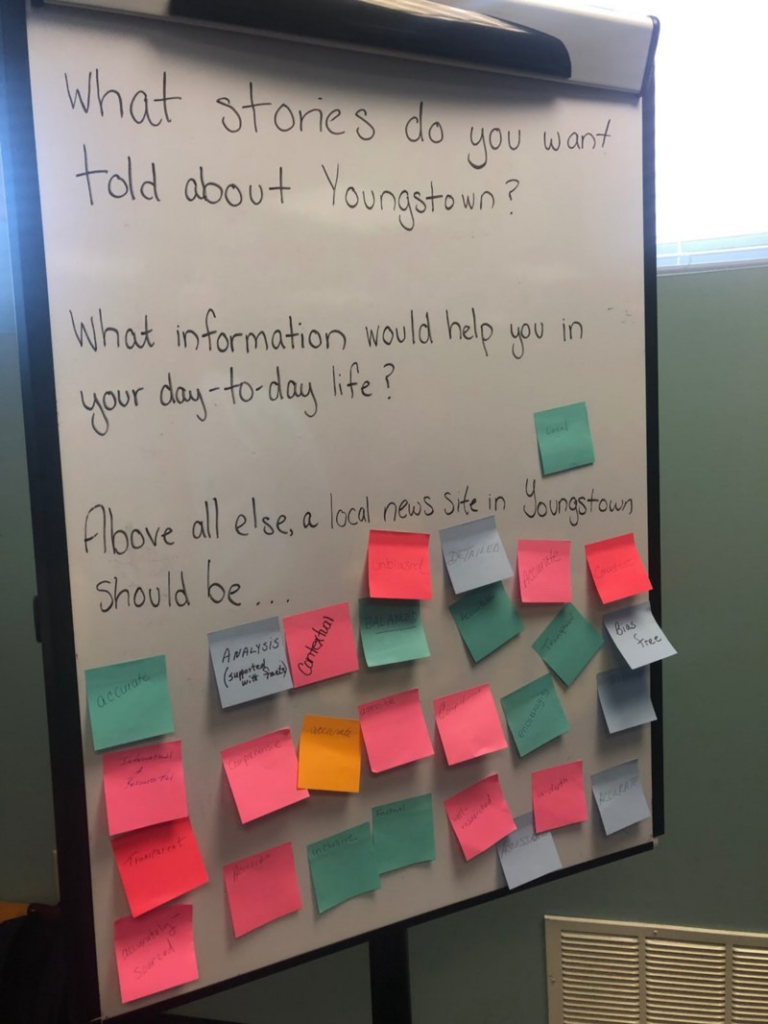
Reimer focused the focus groups on guiding questions like: What stories need telling in Mahoning County? What information would improve your day-to-day-life? Reimer’s synthesis for the Compass team focused on what residents strongly wanted, what they strongly didn’t want, and what they were most passionate about.

That winter, Compass Experiment General Manager Mandy Jenkins started recruiting to hire someone who’d be in charge of growth and launching a new membership program for the newsroom. They had big plans: exclusive content, live-events at breweries and summer fairs, and swag. 

Then, COVID hit. 

The Compass team decided to revise their plans to launch membership. They realized it was nearly impossible to come up with alternatives to their previous launch plans. Of course, events were out – and exclusive content felt cruel and out-of-mission for Mahoning Matters to start offering right as coronavirus and Black Lives Matter protests were reaching their 2020 peaks. 

Instead, Compass decided to again double down on audience research. This time, with in-person focus groups impossible and an existing newsletter list of readers, they opted for a survey. They sent the survey to 50 people who financially contributed to the newsroom in the past year. They wanted to know: what do you, our early supporters, like the most about what we’re offering so far? What can we improve? See here for that Mahoning Matters Contributor Survey

A sample question from Mahoning Matters’ Contributor Survey

The results

The focus group process in August 2019 helped the team determine what, exactly, their new newsroom would cover. Attendees wanted to easily access and understand public resources like job listings, veterans’ resources, and affordable housing access. Overall, they heard from attendees that Mahoning Matters would need to both be the journalism of protection – uncovering corruption and misdeeds and of discovery – telling the full story of Youngstown, successes and all. 

They also heard loud and clear from the focus group participants, essentially, “If your newsroom has a paywall, we are out.” Reimer’s notes showed the majority of participants felt strongly that they local news should be accessible for as many people as possible. This has pointed Compass Experiment team to membership as the best path forward. 

The team received 20 responses to the survey it sent to the site’s first 50 financial supporters. This was less than the team expected for a completion rate, and they planned to run a virtual focus group with survey respondents who opted into one, but only four people indicated interest.

The team was still able to gather some interesting insights, including what drove people to support them: the newsletter, watchdog journalism, and hyperlocal news. Many said they had been Vindicator subscribers. One said, “The Vindicator closing was a shock to me, and I don’t want that to happen, again.” Another said, “We need independent local journalism dedicated to Youngstown.”

This October, the Mahoning Matters team plans on harnessing the excitement around their one-year anniversary to conduct a wider survey and convene another focus group.  This time, they intend to send out the survey to their entire email list to take a temperature check on how satisfied their readers are with their work, one year in. 

What they learned 

It’s hard to conduct audience research without readers. The Compass Experiment team found it difficult to recruit folks to attend their focus groups early on without an existing base of people or readers. The early focus group participants were mostly a mix of people recruited from Jenkins’ blog post in July announcing that the Compass Experiment was coming to Youngstown (Jenkins had included a dummy email list for people to sign up for updates) and folks that the local libraries recruited from hanging flyers. Another thing the team learned: if you want to attract people to your focus groups, serve lunch! 

Especially in the early days of a newsroom, consider creative ways of reaching the community members you seek to serve. Some creative ways include partnering with a local library to help recruit participants, or purchasing the email list of potential partners in community media. to give you a starting point. The Compass Experiment team was able to put their own learning here into practice when they launched their second site, The Longmont Leader, in Longmont, Colorado.

This time around, the team knew they needed help finding an early target audience. Given the statewide lockdown in Colorado, they had to do surveys and small group discussions virtually rather than at fairs, farmer’s markets, or local microbreweries. So, instead of relying on Facebook lead acquisition and Google ads to build the initial audience list, they purchased the digital assets of the Longmont Observer, a nonprofit community news site, including its email list of nearly 1,000 local readers.

They sent a survey to this list of 1,000 people and, in only a few days, received 128 responses in return. This time, enough people opted in for the focus group that they were able to host three virtual focus groups and dig into their early audiences’ thoughts on local news in the area, their information needs, and what they liked (and didn’t like) about living in Longmont.  

Key takeaways and cautionary notes

Be clear with your audiences about your financial situation. Around the same time the Compass Experiment launched a local news site in Youngstown, Ohio, the local newspaper in Youngstown (The Vindicator) was shutting its doors.

The Compass Experiment learned from early focus groups that people in Youngstown, even die-hard news consumers, had no idea the Vindicator was in such a state of distress. The Compass Experiment is making sure that both of their newsrooms are clear to tell people, “here is our financial situation – we have this runway with Google, but it will run out. New advertising money is not coming in. We will need your help.” They plan on continuing to emphasize this messaging with their readers and early contributors as they gear up for an eventual membership launch. 

Other resources 

Newsroom overview

Who They Are
A nonprofit Canadian news site focused on coverage of the environment
Location
Victoria, Canada
Founded
2018
Launched membership
2018
Monthly unique visitors
250,000
Number of members
1,600
Percentage of revenue from membership
25 percent

The Narwhal has taken a test-and-learn approach to optimizing its digital platforms for membership. 

In recent months, the site has run experiments to grow its audience, develop more loyal users, and make it easier for readers to become donors. 

One of its most successful tests has been to optimize the “donate” button on its website with language that better reflects its values as a news organization and has helped lead to a bump in membership. Its focus on the donation button has been a significant win, but its continuing to expand its testing repertoire to include a focus on search engine optimization, email newsletters, and more. 

Why this is important

The number of things a digital news site has to know how to do to reach sustainability can be dizzying. Many of them, such as conversion optimization, are far outside the skills most journalists have. These big decisions can be de-risked by taking a “test-and-learn” mindset to them.

The Narwhal is constantly running tests. 

“It comes down to always thinking about how we can improve what we’re doing,” said Arik Ligeti, The Narwhal’s audience engagement editor. “Never getting too comfortable with how things are operating. Even if things seem to be going great, how can we take them up a notch? It can be easy to get bogged down in all of your daily tasks. It’s about making experimentation part of your routine as much as possible.”

The Narwhal is a small team of 10 people. This case study offers guidance on how similarly small teams can optimize their operations to enhance their membership programs.

What they did

Until earlier this year, The Narwhal’s main donate button on its website enabled only one-time donations. 

As part of its participation in the Facebook Journalism Project’s Membership Accelerator, The Narwhal changed how it approached reader support. (The Lenfest Institute partners with Facebook to administer its accelerators and helps share learnings from them.) 

The Narwhal made a conscious decision to change the default to monthly recurring donations. It made the change because members who give monthly tend to have higher retention rates and bring in more revenue over time than those who just give one time. (See the retention section for more on monthly giving.)  

As a result, it changed the language on its website from “Donate” to “Become a Member.” That change resulted in 26 new members within the first two weeks of making the switch, which was an 120% increase in revenue per site user compared to a two-week stretch with a similar amount of traffic. 

But it wanted to see if it could improve on the results. It decided to run an A/B test on its website using Google Optimize. Most testing decisions, including this one, begin as a conversation between Ligeti, Emma Gilchrist, the site’s editor-in-chief, and developer Chris Desjardins. “There’s not a lot of bureaucracy,” Ligeti said. 

Half of the site’s visitors saw the standard “Become a Member” language and the other half saw “Become a Narwhal.” 

A screenshot of The Narwhal’s homepage with the “Become a Narwhal button”

Over the 18 days it ran the test, it was clear that “Become a Narwhal” was outperforming the previous option. “Become a Narwhal” had a 0.29% clickthrough rate compared to a 0.17% clickthrough rate for the original “Become a Member” 

“I’d boil that down to a curiosity factor, probably. Oh, what is ‘Become a Narwhal’? Then once we were pretty confident with the results we made the permanent flip.” 

The donation button test is just one part of a larger effort for how The Narwhal is thinking about how it can optimize every level of the funnel — from attracting new readers to converting regular readers into sustaining members. 

It also ran experiments in its email newsletters by including donor solicitations higher up in the newsletter. 

Using funds from the Accelerator, it has hired a freelance breaking news writer to boost the amount of coverage it’s able to produce, which it hopes will grow the top-of-the-funnel audience, which it can then convert into paying members. 

“We know that there’s a much bigger audience for environmental news in Canada than we’re currently reaching,” he said. “Even though we’re growing exponentially compared to where we were a year or two ago, we’re thinking on that level about how we can bring people into the newsletter, how to reach more people on search…and thinking about how if someone is just searching for environmental news that they’re finding us.”

The results

Over the course of nearly 400,000 unique sessions, the “Become a Narwhal” button had a 0.22 percent click through rate compared to a 0.14 percent click through rate. 

126 new members came from clicking on “Become a Narwhal” 

Since March, when they made the button switch, the site has added 519 new members, bringing its total to 1,500 at the end of June, exceeding its annual goals. The Narwhal’s new goal is to reach 2,000 members by the end of 2020. And it plans to continue to optimize its operations by overhauling its donation page by implementing a streamlined checkout process and adding in Apple and Google Pay. 

The Narwhal says it expects $100,000 in new customer lifetime value from the new members it has added since the spring when it joined the Accelerator program. Check out the retention section for how you can calculate CLV. 

What they learned

Capacity is key. Running a news site is hard, and trying to handle product-thinking decisions and run tests on top of them is even harder. Ligeti joined the Narwhal in March, and he’s been given the responsibility of thinking more strategically about tests to run and then execute beyond just getting the daily products out the door. (It’s still a relatively small team though and he still pitches in on things such as running social media accounts or editing stories.)

“They were throwing together the newsletter, but I get the chance to spend more time with it and think about things like: What if we tested sending it on Thursday versus Sunday or testing where a donate button might appear,” he said. “That’s not complicated, it just takes a bit of time. If you’re juggling a million things, that’s not going to be at the top of your agenda.”

Give your team the autonomy to test. The Narwhal was able to get the test up and running pretty quickly because there wasn’t a huge amount of bureaucracy. Ligeti said he had some discussions amongst the site’s editors, but other than that they just decided to go with it and see what would happen. “It’s a pretty open culture,” he said. 

The Narwhal also has a freelance developer on retainer, and he was a regular part of the team’s accelerator sessions, so he was able to quickly spin up tests and new features to get them in front of audiences to get immediate feedback — including with the “Become a Narwhal” button. By empowering the team to try out different things, The Narwhal has established a culture that encourages learning. 

Key takeaways and cautionary notes

No test is too small: Small tests can make a big difference. The Narwhal learned that from its test around the donation button. Even though it may seem trivial, minor upgrades to your website performance through elements such as the donate button can make significant differences in your conversion rates, which are critical to the success of a sustainable membership program. 

You have to be OK with a bit of risk. There’s always the chance that a test could lead to adverse results. Adopting a test-and-learn mindset requires suppressing the impulse to stop a test the minute results start to trend downward. The data you’ll gather from completing the test, even if it leads to a dip in member conversions, will give you important insights that you can use to recover lost ground – and then some.

You don’t need flawless results. With the donation button test, The Narwhal is fairly confident with its results, but there may be pieces missing. Due to the fact that it’s using an outside payment processor, it’s not sure if everyone who clicked went on to become a member. “That also highlights that even though we had the insight, and we were confident enough to make the switch, having the higher click rate alone…if you’re having more people alone visit, we were confident that was still helping convert more people.” 

By not focusing on perfection, The Narwhal was still able to get enough information to make a decision to make the switch on its donate button. 

Other resources

Newsroom overview

Who They Are
A Spanish fact-checking platform focused on combating the spread of disinformation
Location
Madrid, Spain
Founded
2018
Launched membership
2019
Monthly unique visitors
3,030,874
Number of members
42,925 total members, including non-paying ones; about 1,000 paying members

Spanish broadcast journalists Clara Jiménez Cruz and Julio Montes launched Maldita.es (Maldita translates to “The Damned”) as an independent organization in 2018, four years after they began experimenting with fact-checking as a side project called Maldita Hermeroteca. Most of the claims they spend their time debunking come from tips from community members. 

In 2018, they sent out a survey to community members to learn what they thought about Maldita. It included questions about what skills they could contribute to Maldita. The enthusiastic response (2,645 answers within four days, according to a European Journalism Centre profile) prompted them to make harnessing these skills a central part of their strategy going forward. Maldita branded members’ expertise as “superpowers” and created a database to make it easier to tap those superpowers going forward. 

Why this is important

Organizations succeed at membership when they find the intersection point between their needs and potential members’ motivation to participate and contribute. For Maldita, those needs are financial support and expertise to help expand the scope and speed of its fact-checking operations. Maldita gives members, aka Malditos, an opportunity to contribute one or both, and have worked to make the two opportunities clear and easy to understand, while also safeguarding the integrity of their journalism. 

With its “superpowers” database, Maldita is also one of the few organizations the research team studied who has recognized a contribution other than money as a pathway to membership.

What they did

Maldita launched their membership program, inviting community members to “become one of the damned,” in June 2019. They began asking Malditos to consider adding themselves to the superpower database at the same time. 

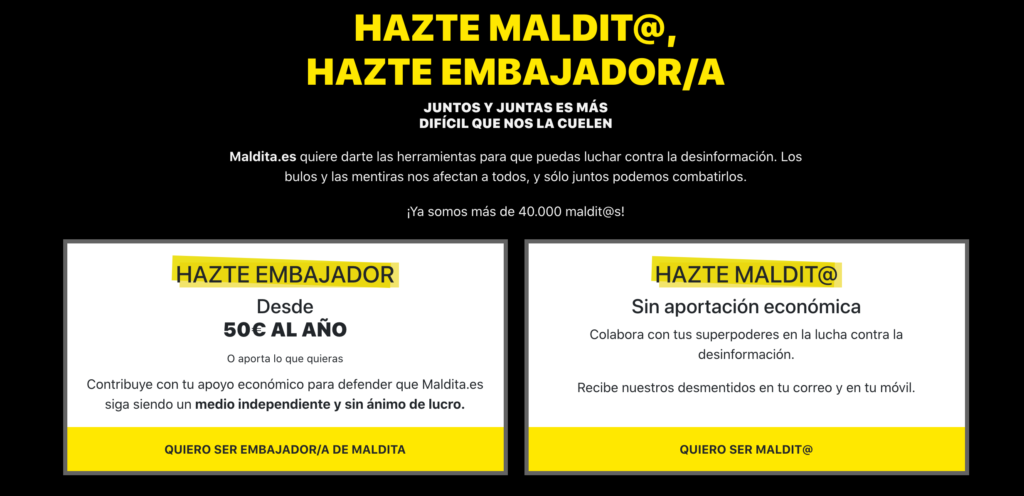
Today, there are three types of Maldita members, all of them called Malditos (see landing page for more detail):

  • General Malditos: Anyone who has signed up for one of Maldita’s newsletters (about 40,000 people in July 2020)
  • Ambassadors: Any of the 40,000 Malditos who is also a financial supporter of Maldita (about 1,000 ambassadors in July 2020) 
  • Malditos who contribute superpowers: Any of the 40,000 Malditos who registered their expertise (aka “superpower”) to support Maldita’s fact-checking efforts (about 2,000 active accounts in July 2020)
Maldita’s membership landing page (Courtesy of Maldita)

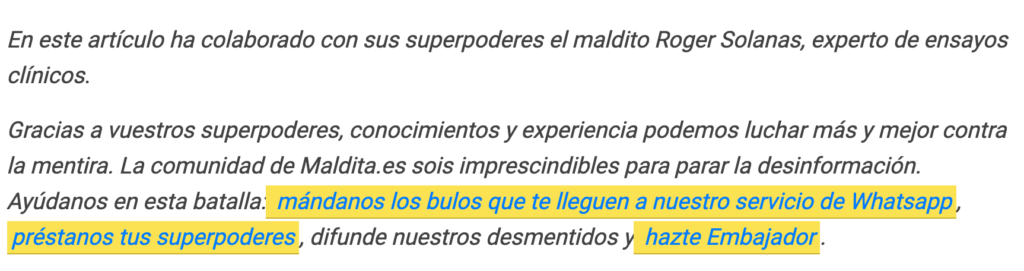
They recruit superpower Malditos with calls to action in their newsletters and on their website. When they publish a fact check in collaboration with a Maldito, they acknowledge them in the post-article footer and invite other people to add their own expertise to the database.

English translation:

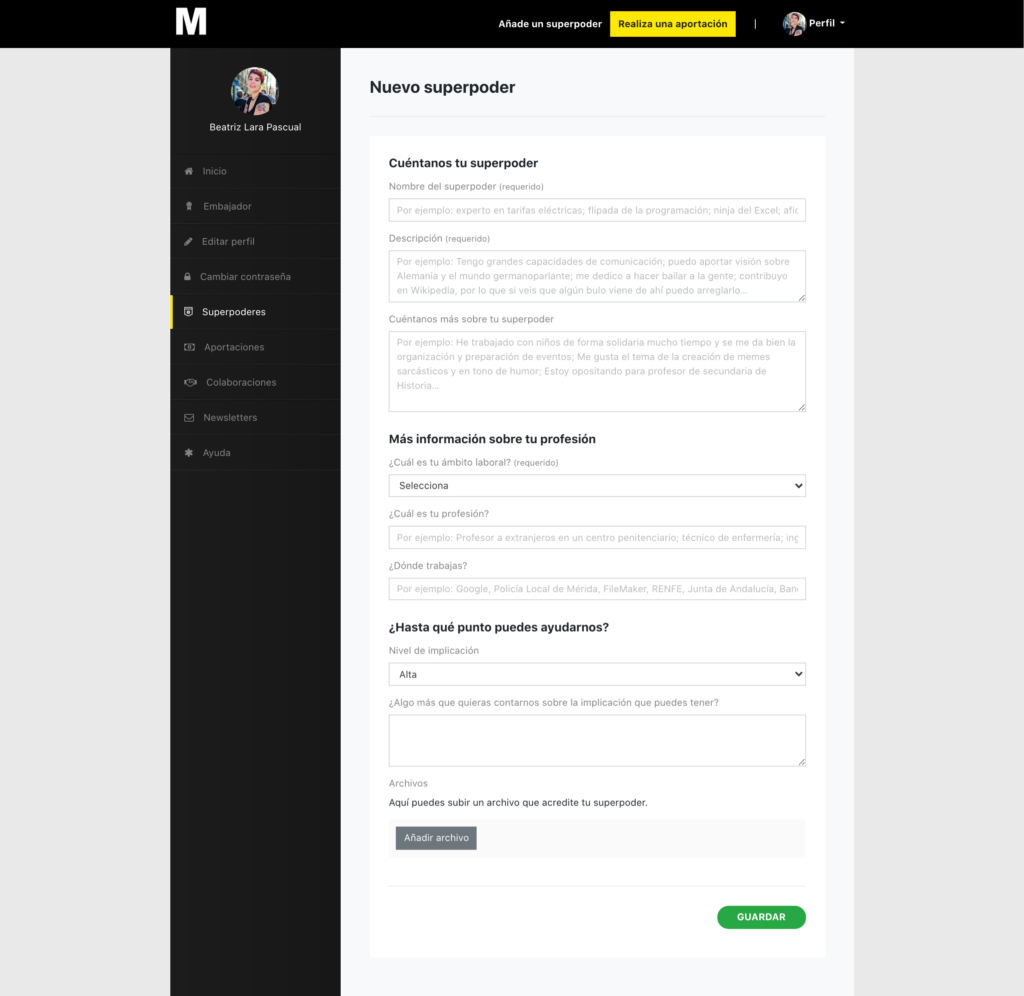
There are three steps to joining the superpower community: registering on Maldita’s platform, providing details about their expertise, and getting verified. The expertise form includes a place for Malditos to upload proof of their credentials – a LinkedIn profile, for example, or a copy of a diploma or research paper if they are an academic. 

When designing the expertise form, Maldita struggled to figure out the right balance between pre-filled categories and open-ended fields. Pre-filled categories can’t capture every aspect of someone’s knowledge, but completely open answers were difficult to make searchable. They ultimately decided to use open fields in the form. After it’s submitted, community manager Bea Lara reads the replies and adds appropriate categorical tags for future use.

An example of the superpower signup page 

Screenshot of the page where Malditos register their superpowers (Courtesy of Maldita)

Lara gives the example of a biologist with an expertise in virology who might also have above-average knowledge of nutrition. With a pre-filled category system, that person would likely register as a biologist and stop there. “If you don’t have an open field where people can write and write and write, you won’t get any of that nuance,” she says. 

Most people add two or three sentences of description about their expertise. 

“You can tell if people are interested in collaborating based on the quality of the response,” she says. “A two-word answer is not a good sign, but people who explain more, you know that these people are really interested in engaging with you.”

As the community manager, a key part of Lara’s job is helping the journalists find the right people in the superpower database. Once Lara identifies a Maldito, she’ll share that person’s information with the journalist working on the fact check, who will reach out via whatever mode the Maldito indicated. 

Maldita only relies on a superpower contributor as an independent source if they’ve worked with them many times in the past. Otherwise, they’ll seek independent verification of anything a Maldita provides. Even with that backstop, working with Malditos can significantly speed up the debunking process by reducing the amount of time a journalist spends trying to narrow their inquiry.

Each Maldito in the superpower database has a credibility rating, and one of the factors that influences it over time is how often they successfully collaborate with reporters. Those with higher credibility ratings might eventually be considered as an independent source. 

The results

The topics for superpower collaborations vary widely. Maldita now collaborates with superpower contributors on everything from lighthearted, viral pranks to the safety of putting a pool on an apartment balcony to coronavirus misinformation. 

One of Lara’s favorite examples is a collaboration to debunk a hoax about a new strategy for car hijackings in Madrid. For years, rumors circulated about criminals throwing eggs on car windshields because the egg whites would not come off with water, blinding the driver and making it easier to hijack the car. 

Their database included an expert on eggs, so Lara reached out to him for help disproving this hoax. The Maldito went out and threw eggs at her car windshield, then added water – and proved that the residue came off easily. 

The superpower community that has developed around “Maldita Ciencia,” their science-focused vertical, is particularly strong. Lara estimates that they use one or two superpowers a week. One week in summer 2020, they used 10 superpowers. They’ve worked closely with this community throughout their coverage of coronavirus to debunk misinformation that masks can cause hypoxia, that the flu vaccine can cause coronavirus, and that a vaccine has been approved despite causing serious side effects.

They’ve refined the use of the credibility rating system over time to reflect not just the credibility of a person, but their accessibility as a source. Factors such as thin replies in the initial expertise form, slow or non-replies to outreach, and vague answers all contribute to lower ratings. Those with low credibility ratings can be filtered out of search results, even if the area of expertise is a match. The rating goes up when someone collaborates helpfully on an article. 

As the strength of the “superpower” community has grown, Maldita has designed increasingly tailored opportunities to participate. 

The superpower community includes a substantial number of educators, particularly at the university and secondary (high school) level, who are very interested in the educational side of disinformation. Maldita launched a newsletter specifically for teachers of any kind, geared toward helping them teach students how to identify and combat disinformation. They send it once a month, and it includes a mix of advice and curriculum materials.

What they learned

People need help understanding their superpowers. Teaching people to understand that they don’t need to have incredibly specialized expertise for it to be a superpower requires clear language, frequent examples, and a strong feedback loop. 

“The concept of superpowers is very powerful, but for some people it’s difficult to understand,” Lara says. They think it’s something “really amazing, like being a chemical expert in proteins… “Sometimes we only need a good lawyer or someone who knows about mental health,” she says. At one point, they needed a handyman to fix their broken door – and they found a Maldito to do that, too.

Key takeaways and cautionary notes

Be clear about what it means to be a member of your organization. At Maldita, a member is anyone who receives their free newsletter. “Ambassadors” are members who also provide financial support, and superpower contributors are members who also help debunk misinformation by sharing their expertise. If there’s more than one pathway to membership, like there is at Maldita, specificity of language becomes even more important to making sure all members feel valued – particularly for making sure that those who don’t contribute money don’t feel like lesser members. 

Trolls exist. The superpower database only works because Maldita has been careful to evaluate the credibility of each person who registers, and to put red flags on those accounts. 

Other resources

Newsroom overview

Who They Are
A conservative news startup that serves audience members primarily through newsletters and podcasts
Newsroom
The Dispatch
Location
Washington, D.C., USA
Founded
2019
Launched membership
2019
Number of members
16,000

The Dispatch launched in 2019 as the first news organization to publish entirely on Substack, the email-first platform that is primarily aimed at serving individual writers. 

The mostly member-funded publication publishes primarily through email newsletters and podcasts. The team knew it needed a publishing platform that supported both content types and would allow them to easily process member payments – and the founders wanted to do it cost-efficiently to extend their runway.

The Dispatch didn’t care as much about having a website as it did about having a seamless newsletter, podcast, and payment experience for its audience members. So the founders turned to Substack and worked with the team there to tweak the platform to meet The Dispatch’s needs. Although they had to make some tradeoffs, such as giving up a personalized landing page, it’s been able to achieve its main goal: keep the tech stack as simple as possible so that its small team could focus on its editorial coverage and serving members.

Why this is important

Because it was launching into a competitive political media landscape with limited resources, The Dispatch knew that its coverage would need to be highly differentiated in order to stand out. It strived to make its tech choices as simple as possible so the team could focus on its editorial coverage and be sure members would have a seamless experience. 

“We decided that we’d launch a little smaller, and we would really make the website the third most important of the editorial products, with the first two being newsletters and podcasts sort of tied for No. 1,” Hayes told Nieman Lab. “In retrospect, we’re very glad that we had that flexibility and that we didn’t just stick to our original plan and learned along the way.” 

No solution is perfect, but the Substack platform got The Dispatch most of where it wanted to be. And because they were the first news organization to work with Substack, the company has been responsive to The Dispatch’s needs, building out some new features and making some accommodations on to their platform. The Dispatch has also developed some of its own temporary workarounds. 

This case study is an example of an organization that chose an out-of-the-box technological solution and made it work for its needs. Being clear about your priorities, like The Dispatch was, will allow you to make a clear-headed decision about what is worth time and expense, and also potentially empower you to lobby more strongly for what you need to make an out-of-the-box solution work for you.

What they did

When The Dispatch debuted in 2019, it wanted to focus on reporting. 

“We’ve just said to people we want to provide you with content, really good content with reporting, and we otherwise want to leave you alone,” Hayes told Nieman Lab. 

That’s why it turned to Substack: the platform handled email publishing, podcast hosting, and payment processing, the core elements needed to run its membership program. 

“It’s an interesting experiment that we have newsletters as our core product, and the website is the less important product,” Hayes told us.

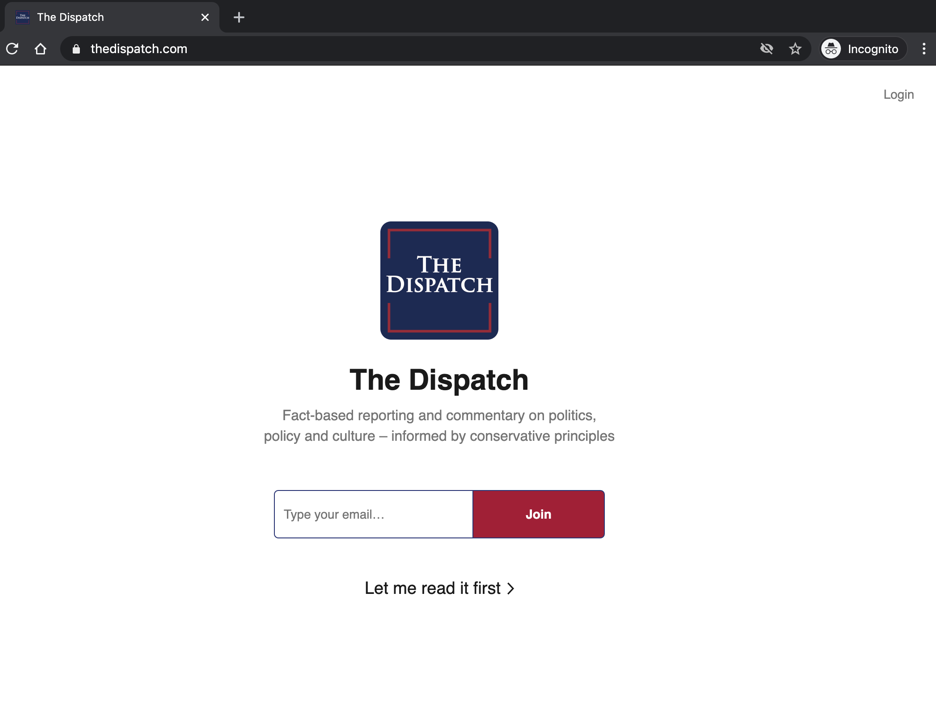
Like with all Substack publications, when you go to The Dispatch’s website, the first screen is Substack’s standard newsletter call to action that also allows readers to skip through to the content. This is a sharp departure from the comprehensive websites that most news organizations launch with.

The Dispatch’s main page (Courtesy of The Dispatch)

By clicking through to “let me read it first,” readers are taken to a modified Substack homepage that features a top story and then a stream of content. Unlike most Substacks though, their homepage lists the series of newsletters and podcasts that readers can subscribe to. The Dispatch publishes about three stories per day. 

The Dispatch had to give up a few features to work with Substack, though. Because Substack is designed for single writers, it doesn’t have a sophisticated analytics tool and doesn’t allow users to segment email audiences. This prevents The Dispatch from targeting different elements of its audience with membership appeals.

The Dispatch built some workarounds with Google Analytics and hired an outside consultant who developed a dashboard that enables The Dispatch to segment a bit and understand a bit more about its audience.

Meanwhile, Substack made some accommodations to support The Dispatch, such as the more extensive landing page mentioned above that integrates its podcast and newsletter operations. The Dispatch also has its own URL that doesn’t include Substack. (Most Substack users have a URL that reads name.substack.com.)

And The Dispatch said Substack plans to add improved analytics tools in a few months, which made the wait worth it. 

Substack has also adapted to The Dispatch’s language and mission. 

The results

At Substack’s recommendation, The Dispatch initially offered all of its newsletters for free as a way to gain an audience and build loyalty before asking people to become members. By the time it made some of its newsletters member-only in February 2020, it had gained 53,000 newsletter subscribers. 

The Dispatch began its membership program by offering lifetime memberships at its soft launch in October 2019. The lifetime membership costs $1,500, which comes with invitations to special events. In early December, they began offering annual memberships. The Dispatch now has a membership program that costs $100/year or $10/month.

The Dispatch has 16,000 paying members today, generating more than  $1 million in revenue the first six months. Substack takes a 10 percent cut of the membership revenue. 

Today, The Dispatch offers eight member-only newsletters, including a daily morning roundup and a weekly overview of the best news. It also produces three podcasts. They’ve maintained two free newsletters and plan to add more over time.  

The Dispatch’s 2020 goal was initially 2,000 paying members. When lifetime membership took off in the fall, it revised its goal to 4,200 paying members. With 16,000 members, it has surpassed even those initial projections.

“Much of the growth that we’ve seen at this point has been organic,” Hayes told us. “We have not yet set our year end 2021 goals. We’ve so blown past our year end 2020 goals.”

What they learned

Start lean. The Dispatch initially planned to launch with a staff of 25 to 30 people and a traditional website, but given the challenges of the news industry, the outlet decided to just start publishing and grow from there. By utilizing the Substack platform, it was able to get immediate feedback from its members and continue to tweak its offerings in a cost-effective way. 

Platform as a partner. Hayes emphasized The Dispatch’s appreciation of working with Substack and getting to learn from their experience with many newsletters. Without Substack’s suggestions, it may have not started out free, gained its organic growth success, or received the newsletter success. In return, Substack also recognizes Dispatch’s opinions and feedback, and the two organizations have had an effective partnership.

“The Substack folks have done a good job of reaching out to other writers and trying to help them build and come up with ideas, and one of the things that they do is they share and see from their perspective what has worked,” Hayes said. “They gave us a bunch of ideas about how to use our Twitter accounts to build out membership.”

Key takeaways and cautionary notes

Launching on Substack allowed The Dispatch to outsource its core tech concerns and prioritize its journalism, which is its core membership offering. Substack didn’t offer everything the site wanted, but it was enough to provide a useful user experience to its members. 

Know your priorities. Every technical decision has tradeoffs. Being clear about your priorities will help you make smart technical decisions that serve your mission and your members’ needs. For The Dispatch, a good user experience with newsletters, podcasts, and payment were more important than having an extensive homepage. Knowing that helped them feel confident choosing substack. 

Know your worth. As the first media company on the platform, The Dispatch is valuable to Substack, too, and has been able to request some accommodations. “We’re experimenting as we go,” Hayes told us. “Every time Substack says in conversation to us ‘subscription,’ we say ‘no, members!’”

Other resources